Supply Chain Attack Examples: How They Happen, Why They Succeed, and How to Prevent Them
On this page
Most Supply Chain Attacks Start Where Teams Feel Safe
Teams usually imagine a breach as a direct hit: an exposed server, a weak password, a vulnerable API, or an application bug that gets exploited in production.
Supply chain attacks feel different because the attacker often comes in through something the team already trusted. It may be a dependency update, a build workflow, a vendor patch, a JavaScript CDN, a maintainer account, or a package that looked routine at install time.
That is what makes the problem so uncomfortable. The attacker is not always forcing the door open. Sometimes the attacker is getting invited in through normal engineering behavior.
What Is a Supply Chain Attack?
A software supply chain attack is an attack in which an adversary compromises a component, service, or delivery path that your software depends on, then uses that trusted path to reach your systems or your users.
That compromised path might include:
- an open-source package or transitive dependency
- a package registry or artifact source
- a CI/CD workflow or third-party action
- a software update mechanism
- a code-signing or release process
- a browser-side script loaded from a third-party domain
- a container image, build agent, or release artifact
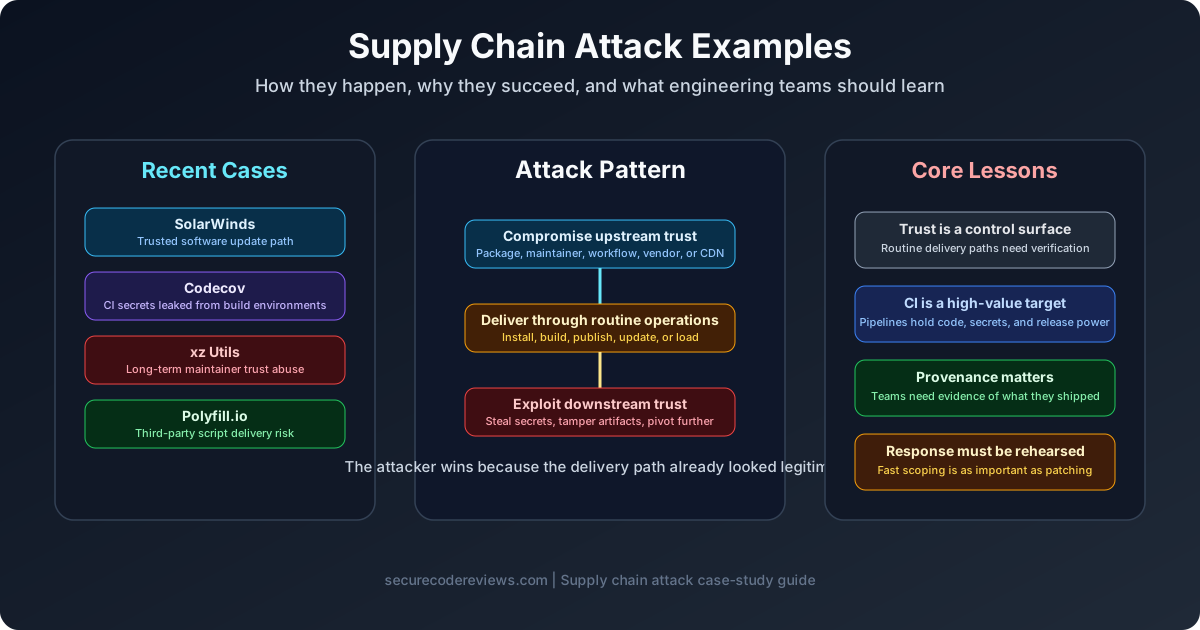
The basic pattern is simple: instead of attacking your application head-on, the attacker tampers with what your application, developers, or customers already trust.
Why Supply Chain Attacks Are So Effective
Supply chain attacks work because modern software is assembled, not handcrafted from scratch.
Even a small engineering team may rely on:
- hundreds of direct dependencies
- thousands of transitive packages
- SaaS build and deployment platforms
- external CI actions and templates
- container base images
- observability agents and SDKs
- browser-side scripts and performance tooling
Every one of those choices is practical. Most are necessary. But every one also expands the trust surface.
The attacker only needs one trust path that is broad enough and monitored poorly enough.
How Supply Chain Attacks Happen in Practice
The details vary, but most incidents follow the same operational logic.
1. Find the trust bottleneck
Attackers look for components that sit upstream of many targets at once.
Typical examples:
- a popular library
- a shared build workflow
- a widely loaded script
- a vendor update server
- a maintainer with publish rights
- an internal package name that can be guessed
2. Compromise the upstream point
This can happen through phishing, credential theft, social engineering, registry abuse, dependency confusion, domain takeover, or a patient campaign to gain maintainer trust over time.
3. Deliver the payload through routine operations
The malicious code reaches downstream systems via normal activity:
- a developer installs a package
- CI executes a workflow
- a release pipeline publishes an artifact
- a fleet downloads an update
- a website loads a script from an approved domain
4. Use trust to bypass suspicion
This is the crucial step. The code often looks legitimate because it arrives through a channel everyone expects. No one is surprised that the build ran, the package installed, or the update succeeded.
5. Expand impact downstream
Once inside, the attacker can steal secrets, alter artifacts, establish persistence, inject malware, or pivot into cloud, endpoint, or customer environments.
Common Supply Chain Attack Patterns
Dependency confusion
Dependency confusion happens when a build resolves a public attacker-controlled package instead of the intended internal package. It is one of the clearest examples of how a naming or registry-precedence mistake can become a real compromise path.
Typosquatting
Typosquatting relies on human speed and inattention. A package name that looks nearly correct gets installed into a real environment and gains the same trust as the genuine package would have had.
Maintainer compromise
If an attacker compromises a legitimate maintainer account, they do not need a fake package. They can push a malicious release under the real project name.
CI/CD poisoning
Pipelines are high-value targets because they can see source code, secrets, artifact registries, signing processes, and deployment credentials. A compromised pipeline can affect every release that follows.
Poisoned updates
This is the classic vendor-distribution scenario. If the software update path is compromised, organizations may install malicious code through the exact mechanism they normally use to stay secure.
Third-party script compromise
Teams sometimes treat browser-side dependencies as a marketing or frontend concern, not a supply chain concern. In reality, a third-party script loaded on production pages is a code execution path into the browser.
Recent Supply Chain Attack Examples
Case studies are useful because they show the variety of trust paths attackers exploit.
| Incident | Year | What happened | Why it mattered |
|---|---|---|---|
| SolarWinds Sunburst | 2020 | Attackers inserted malware into a trusted software update path | One trusted vendor update became a large-scale delivery mechanism |
| Codecov Bash Uploader | 2021 | A modified script exfiltrated CI secrets from customer build environments | Build tooling proved as sensitive as production infrastructure |
| ua-parser-js | 2021 | Malicious versions delivered credential stealers and crypto miners | Routine package updates became a malware channel |
| PyTorch nightly dependency confusion | 2022 | A public package was used to target a machine-learning dependency path | Internal naming and registry controls turned out to be security controls |
| 3CX software compromise | 2023 | Trusted desktop software became part of a downstream intrusion chain | Vendor software can become a second-stage compromise vector |
| xz Utils backdoor attempt | 2024 | A patient social-engineering campaign targeted a critical compression library maintainer path | Maintainer trust, burnout, and governance are part of the supply chain story |
| Polyfill.io domain abuse | 2024 | Previously trusted browser-side script infrastructure began serving malicious behavior | Frontend dependency concentration risk is real and often overlooked |
SolarWinds: trust at scale becomes risk at scale
The SolarWinds incident remains the canonical example because it showed how devastating a trusted update path can become when compromised. Organizations often defend direct inbound access aggressively, but once code arrives as a valid-looking vendor update, the trust model changes.
The lesson is not simply "vendors can be compromised." The deeper lesson is that downstream organizations often lack a practical way to independently verify what an update contains, how it was built, and whether its behavior fits expectations.
Codecov: CI secrets are supply chain targets
The Codecov incident reminded teams that build environments are not just automation helpers. They are concentration points for secrets and release power. If a CI helper or uploader script is compromised, the attacker may gain access to cloud credentials, API tokens, and internal services without ever touching the production application directly.
ua-parser-js: popular packages can become malware distributors
This case was a warning against assuming utility packages are harmless. Small, common dependencies may have a wide install base and low review scrutiny, which makes them attractive delivery vehicles.
3CX: your vendor's compromise can become your compromise
The 3CX incident showed that supply chain risk is not limited to package managers. Desktop software, vendor tooling, and signed updates all belong in the same threat model.
xz Utils: patient attackers can target human trust, not just code
The xz story stood out because it unfolded over time. It was not a noisy smash-and-grab. It highlighted how open-source ecosystems can be pressured through maintainer fatigue, social dynamics, and trust earned gradually rather than through immediate technical compromise.
Polyfill.io: browser-side trust is still trust
Many teams spend heavily on backend controls while loading multiple third-party scripts into the browser with minimal governance. Polyfill.io was a strong reminder that frontend supply chain risk can affect a huge number of websites very quickly.
Why These Attacks Keep Succeeding
Cause 1: modern software depends on too many invisible layers
Most teams know their top-level dependencies. Far fewer understand the full transitive tree, build helpers, pipeline steps, containers, and release-time tooling behind each deployment.
Cause 2: engineering defaults favor convenience
Shared runners, mutable version tags, auto-updates, broad registry access, and long-lived secrets all save time. They also widen blast radius when something upstream goes wrong.
Cause 3: legitimacy hides malicious intent
If something arrives through a recognized process, teams often lower scrutiny automatically. That is why supply chain attacks are so powerful: they exploit trusted routine.
Cause 4: provenance is often weak or missing
Many organizations still cannot answer, with confidence:
- what exact inputs went into this build
- which workflow produced this artifact
- which identity approved or published it
- whether the deployed binary matches the reviewed source
Cause 5: ownership is fragmented
Supply chain security touches developers, DevOps, AppSec, platform teams, procurement, and vendor management. When the responsibility is spread widely, hard controls often arrive late.
The Hardest Challenges for Defenders
Visibility gaps
You cannot quickly scope exposure if you lack reliable SBOMs, package lineage, artifact history, or workflow provenance.
Too much vulnerability noise
Teams may receive endless dependency alerts yet still miss integrity-focused signals such as suspicious maintainer changes, malicious install scripts, or sudden behavior shifts in a package.
Long-lived trust relationships
Something approved a year ago can become dangerous today. Supply chain risk evolves after adoption, not only at adoption.
Hidden concentration risk
One shared workflow, one shared publisher account, or one heavily reused external script can quietly affect many systems at once.
Slow incident scoping
During a live incident, the real question is not just whether a component was compromised. It is which applications used it, what secrets it saw, what artifacts it influenced, and what must be rebuilt. Many teams are weak at that analysis under pressure.
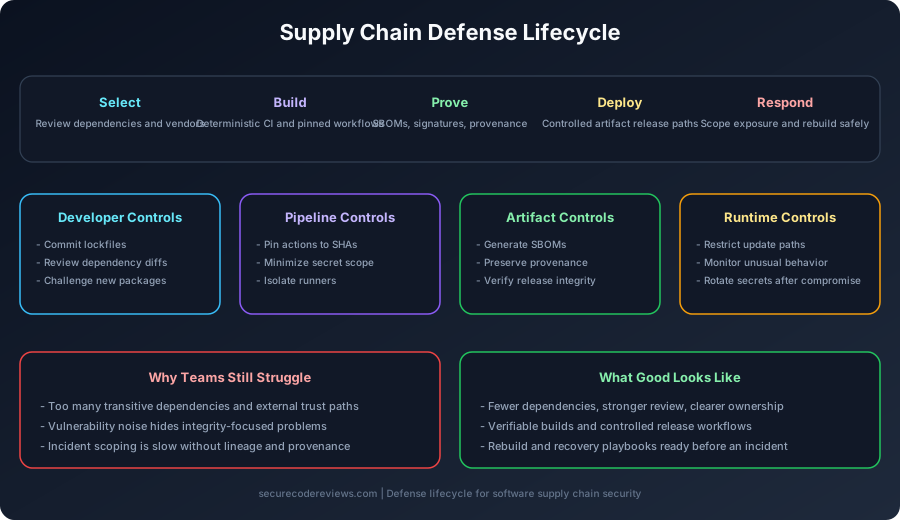
Precautions That Actually Help
The goal is not perfect trust elimination. The goal is tighter, more explicit, more verifiable trust.
1. Pin and review dependencies rigorously
- commit lockfiles
- review dependency diffs like code diffs
- avoid floating tags for CI workflows
- pin third-party actions to immutable SHAs
- use deterministic install paths in CI
2. Shrink the dependency footprint
- remove unused libraries
- challenge each new package during review
- prefer mature projects with healthier maintenance signals
- treat build-time dependencies as part of the threat model
3. Harden the CI/CD path
- isolate runners where possible
- reduce token scope and lifetime
- keep secrets step-scoped, not job-global by default
- separate build, sign, and deploy privileges
- restrict who can change release workflows
4. Track SBOMs and provenance
SBOMs give you visibility. Provenance gives you trust evidence. Together they make incident scoping and release confidence materially better.
5. Use private registries and namespace controls
- explicitly route internal packages through private registries
- reserve internal names where possible
- monitor for public overlap with private naming conventions
- make registry precedence a controlled setting, not a local accident
6. Govern browser-side third-party code
Treat third-party scripts, analytics tags, support widgets, and externally hosted assets as part of the supply chain. Inventory them, review business justification, and remove what is not essential.
7. Watch behavior, not just version numbers
Integrity risk is not captured only by CVE feeds. Watch for unusual network behavior, unexpected install-time execution, suspicious post-install scripts, or publisher changes that deserve review.
8. Rehearse compromise response
If a package or vendor is compromised tomorrow, teams should already know how to:
- freeze the affected pipeline or update path
- search where the component was used
- rotate relevant secrets
- rebuild from known-good inputs
- communicate customer impact and recovery status
A 30-Day Supply Chain Security Checklist
- Commit and enforce lockfile usage in all production repositories
- Pin external workflow dependencies to SHAs rather than mutable tags
- Generate SBOMs for release builds
- Inventory third-party browser-side scripts and remove unnecessary ones
- Review CI secret exposure by workflow and job
- Identify the top 20 most business-critical dependencies across core applications
- Define an incident playbook for compromised package or build pipeline scenarios
- Document who owns supply chain security controls across AppSec, platform, and engineering
What Teams Should Remember
The most important lesson from supply chain incidents is that trust is now an engineering dependency. It is no longer enough to say a package was popular, a vendor was reputable, or a build completed successfully.
The better question is: what evidence do we have that this component, artifact, workflow, or update behaved the way we expected?
Teams that can answer that question quickly are in a much stronger position than teams that simply assume the path is safe because it looked familiar.
Further Reading
- What Is a Supply Chain Attack? How It Happens, Causes, Recent Cases, Challenges, and Prevention
- Software Supply Chain Security: OWASP A03, SBOM, and the Fight Against Dependency Attacks
- OWASP Top 10 2025
- SLSA Framework
- OpenSSF Scorecard
- NIST Secure Software Development Framework (SP 800-218)
Supply chain attacks are rarely only about one malicious file. They are about how much trust modern delivery systems extend, and how little proof many teams require before accepting that trust as safe.
Published by SecureCodeReviews
This article is part of our original AI security and cybersecurity content library. We show publish and update dates, keep company and policy pages public, and update important guidance when material changes affect readers.
Planning an AI feature launch or security review?
We assess prompt injection paths, data leakage, tool use, access control, and unsafe AI workflows before they become production problems.
Advertisement
Free Security Tools
Try our tools now
Expert Services
Get professional help
OWASP Top 10
Learn the top risks
Related Articles
What Is a Supply Chain Attack? How It Happens, Causes, Recent Cases, Challenges, and Prevention
A practical guide to software supply chain attacks for engineering and security teams. Learn what a supply chain attack is, how it happens, why it keeps working, recent real-world incidents, the biggest challenges, and the precautions that reduce risk.
Container Security Best Practices for Production
Secure your containerized applications from image building to runtime with these battle-tested practices.
DevSecOps: The Complete Guide 2025-2026
Master DevSecOps with comprehensive practices, automation strategies, real-world examples, and the latest trends shaping secure development in 2025.